Why Developers Are Abandoning Cloud AI for Local Models (Ollama Explained)
The trend of running AI models locally has exploded. Tools like Ollama and Open WebUI act as the 'Docker of AI', allowing developers to bypass expensive cloud APIs and run powerful, private models right on their local machines.
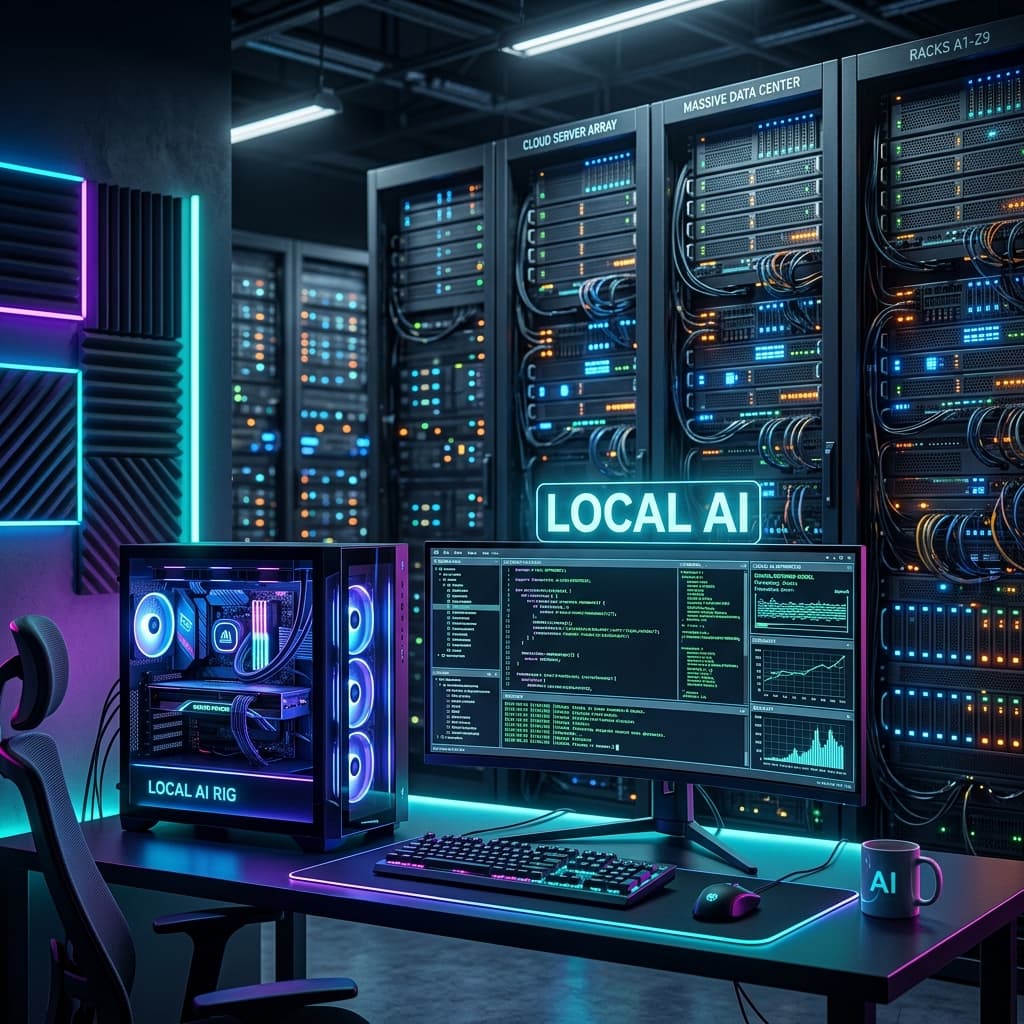
For the last couple of years, building an AI app meant chaining yourself to a cloud provider. You passed your sensitive data over the internet, crossed your fingers that the API wouldn't go down, and dreaded the end-of-month billing statement.
But a massive shift has happened. Developers are cutting the cord. We are entering the golden age of local AI.
The "Docker of AI" Has Arrived
If you haven't used Ollama yet, drop everything and install it. It's often called the "Docker of local AI" because it does exactly what Docker did for web apps: it makes running complex environments ridiculously simple. With a single command (ollama run llama3), you can pull down a state-of-the-art open-source model and start chatting with it through a local API.
Pair Ollama with Open WebUI, a beautiful, self-hosted frontend, and you suddenly have a private ChatGPT clone running entirely on your own silicon.
Why Are We Moving Local?
1. Privacy is Non-Negotiable When you query a cloud LLM, you are sending your codebase, your customer data, or your proprietary business logic to a third party. Local models keep everything strictly on your machine. For enterprise applications and security-conscious developers, this isn't just a perk; it's a requirement.
2. The Cost Plunge Cloud APIs charge per token. If you're building a highly active agentic workflow or processing massive datasets with RAG, your bill scales linearly with your usage. Local inference is a fixed cost. Buy a good GPU once, and your token cost drops to zero.
3. No More Latency Spikes We've all experienced the dreaded "API Rate Limit Exceeded" or the agonizing wait during peak cloud hours. Local models offer consistent, predictable latency.
The barrier to entry for AI has never been lower. You don't need a massive cloud budget anymore—just a decent rig and the open-source community.